
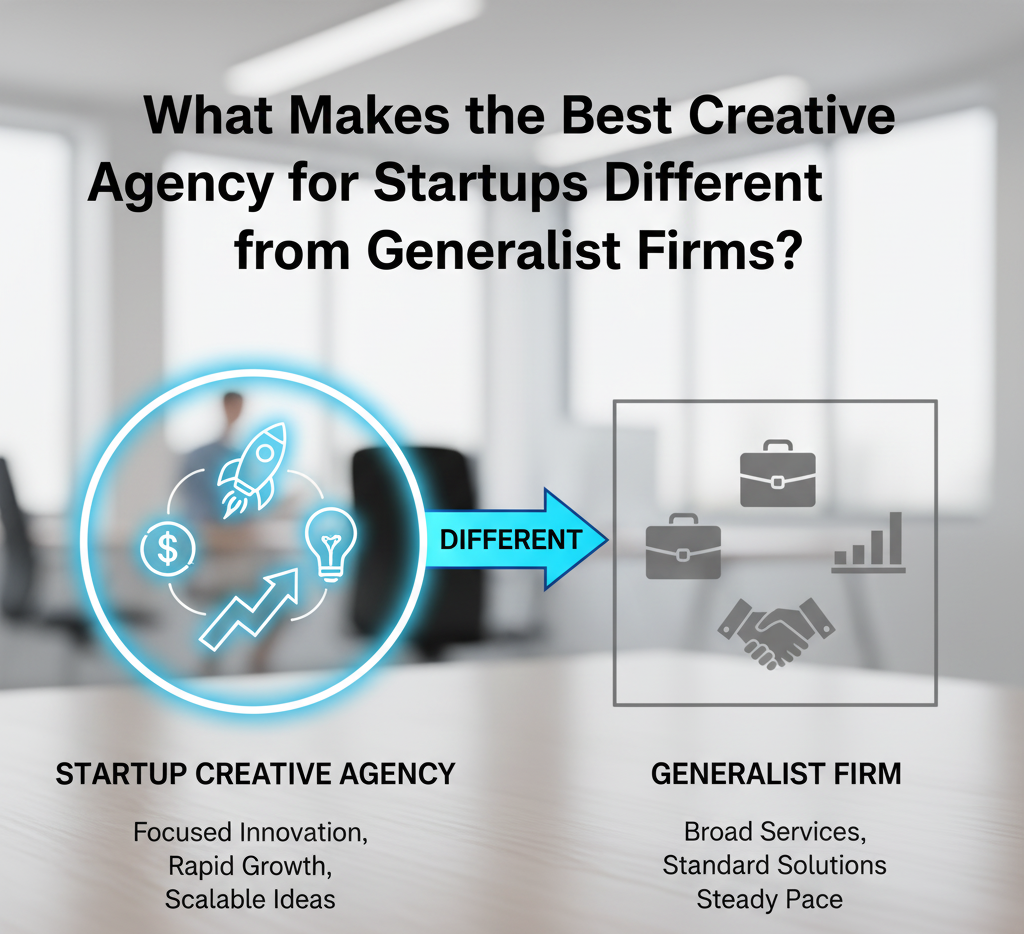
What Makes the Best Creative Agency for Startups Different from Generalist Firms?


Not all creative agencies are erected the same—especially when it comes to serving startups. While generalist enterprises may exceed polished juggernauts for established brands, the stylish creative agencies for startups operate more like strategic co-founders than external merchandisers. That’s what truly sets them apart.
1. They Speak “Author” Easily
Top inception-concentrated agencies understand the unique pressures authors face: limited budgets, undetermined cult, MVP mindsets, and the need to move presto. They don’t demand 6-month brand checkups—they deliver practicable, spare strategies that work now.
2. Check for Strategic Depth
Do they speak the language of business—not just design? Ask how they’ve helped past guests achieve specific issues (e.g., “How did your branding impact donor sign-ups or investor interest?”). Still, they may be hairstylists, not strategists, if they can’t tie creative work to KPIs.
3. Talk to their history (or Current) guests
Request 1–2 references from startups or companies analogous to yours. Ask
- “Did they meet deadlines and budgets? ”
- “Were they visionary or reactive? ”
- “Would you work with them again? ”
Real-world guests reveal trustability, communication style, and problem-solving under pressure.
4. Assess Cultural Fit
You’ll be working nearly constantly—occasionally under tight deadlines. Do they feel like mates or order-takers? Are they curious about your vision? Do they challenge you courteously? Trusting your gut chemistry matters as much as capability.
5. Understand Their incipiency Ignorance
still, ask If you’re a founder
- “How numerous early-stage guests have you worked with? ”
- “How do you acclimatize when your compass or strategy shifts snappily? ”
- “Can you work within spare budgets without compromising impact? ”
Agencies that “get” incipiency constraints will offer flexible models and realistic results.
6. Look at How They Treat the Kickoff
Top agencies invest time and speak out to understand your request, challenges, and pretensions indeed before subscribing to a contract. However, that’s a great sign if they’re eager to dive deep during the pitch. However, be conservative if they’re pushing a one-size-fits-all package.
7. translucency on Team & Timeline
Who’ll actually work on your design? Is it the award-winning creative director—or an inferior freelancer? Get names, places, and vacuity in jotting. Also clarify modification limits, response times, and what “done” looks like.
nethermost line: The stylish creative agency isn’t the bone With the flashiest role, it’s the bone that acts like an extension of your platoon, thinks like an author, and measures success by your growth, not just their aesthetics. Look past the portfolio, and you’ll find a true mate.